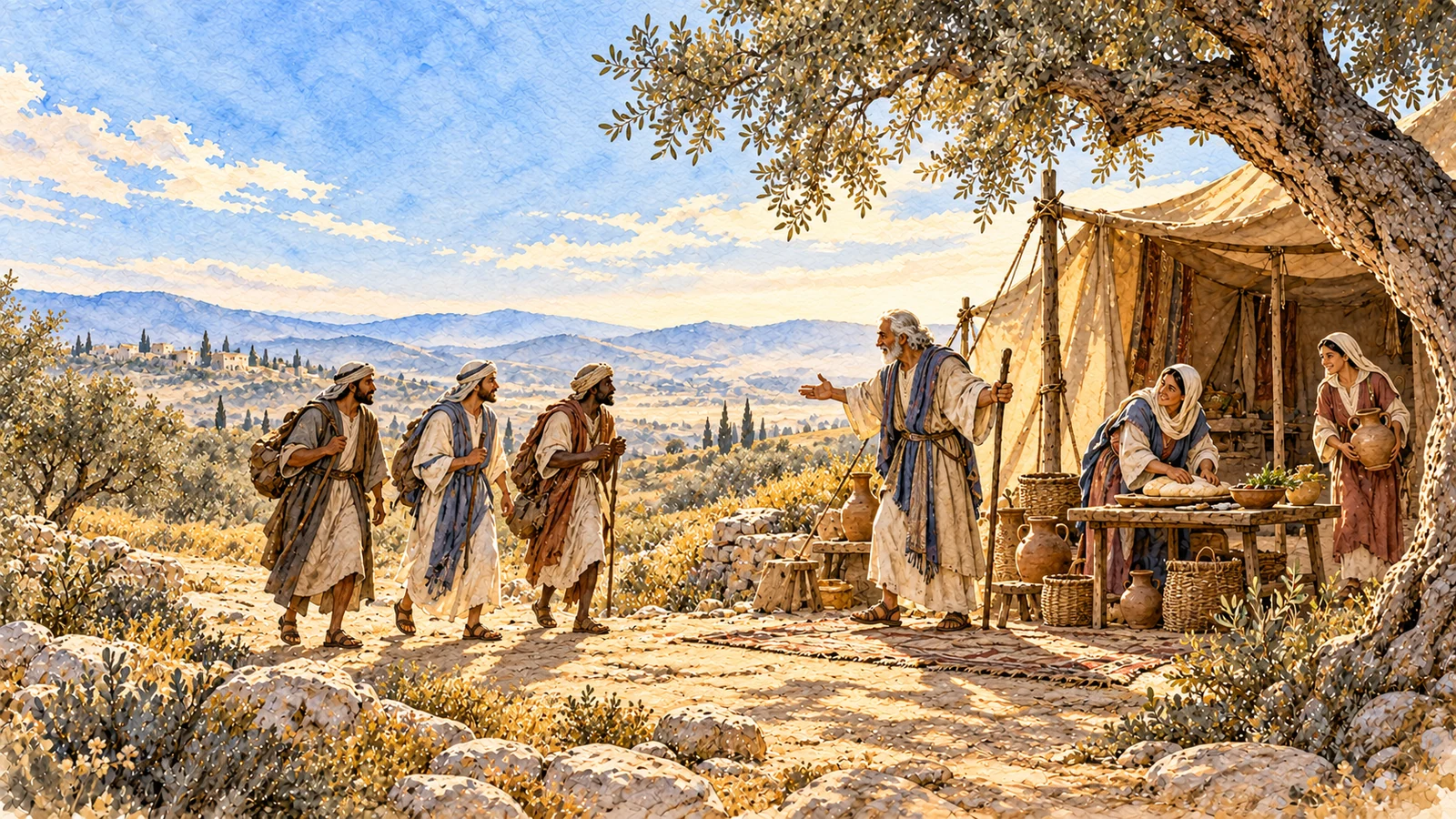
Vayera shows that a miracle asks for a vessel that believes, and that giving is worth it for its own sake, expecting nothing back.
Weekly study · Monday to Friday
✦ All insights are drawn from articles by Karen Berg and Michael Berg published on onehouse.kabbalah.com.
Abraham, in pain on the third day after his circumcision, prepares a meal for three visitors. They were angels, and angels do not eat. Michael Berg teaches that the value lies in the desire to share, not in the result. According to the Zohar, that act brought great blessings.
Abraham accepts at once the news that Sarah will have a son. Sarah laughs, because she cannot believe it. Karen Berg teaches that our reality can only change according to what our mind will allow. We ask for things we do not believe in, and so we never prepare the vessel to receive them.
Michael Berg reads the account of Abraham as a lesson about action: a person becomes what he does. Repeated good deeds change thoughts and desires, even when we do not feel like it. Meditation and intention alone are not enough: action has to show up in the world.
The energy of the week, according to the Kabbalah Centre, is drawing in certainty in your path and your unique process.
The meal was unnecessary. The value was in the desire to share, not in the effect.
Expecting a reaction from the other person can weaken the purity of the act of giving.
Without belief, a miracle cannot take root. The first step is to believe that we can.
Our actions shape who we are, and the frequency of giving and connecting determines how much we grow.
Vayera brings together two accounts: the visit of the three angels to Abraham and the announcement that Sarah will have a son. In the first, Michael Berg shows that Abraham prepares the meal in pain, not knowing the visitors are angels, and that it was not even needed. The Zohar says that act brought great blessings, and the lesson is that we share because we connect to the Light of the Creator, not for the effect we cause.
In the second account, Karen Berg recalls that Abraham accepted the news and Sarah laughed. For her, whoever asks without believing does not prepare fertile soil for the miracle. Reorganizing our consciousness begins with believing it is possible, and each person has the energy needed to fulfill their purpose.
Finally, Michael Berg states that we become what we do: repeated acts shape thoughts and desires, and intention alone is not enough. Certainty in the path is born of this combination: believing, giving with no expected return, and acting.
Begin with belief.
Choose something you ask for and, deep down, do not believe is possible. Write: "I can." Reread it during the day.
Take one concrete step.
Do one small, practical thing that prepares the ground for what you asked. Without expecting the result to appear today.
Give without expecting a reaction.
Share something with someone and let go of their reaction. Notice whether attachment to a thank you or an outcome appears.
Turn intention into action.
Choose a spiritual intention you have only meditated on and turn it into an act in the world, even if you do not feel like it.
Recognize the path.
At the end of the week, write where certainty grew and what you did that sustained it. Thank the Light and carry what you learned forward.
I believe before I see.
I share with no expected return and act with certainty in my process.
May this week of Vayera help you believe in what you cannot yet see, give with no expected return and act with certainty in your path. Shavua Tov!
Sharing with No Desired Outcome, by Michael Berg
We Can All Make Miracles, by Karen Berg
A Person Becomes His or Her Actions, by Michael Berg
If someone you love asks for a miracle without believing in it, this portion shows where to begin.
Share on WhatsAppKabbalistic insights, the consciousness of each Torah portion, and the calendar's windows of Light, straight to your WhatsApp.
Join the WhatsApp group
Comments
Share what this study awakened in you. We're here to listen.
Loading…