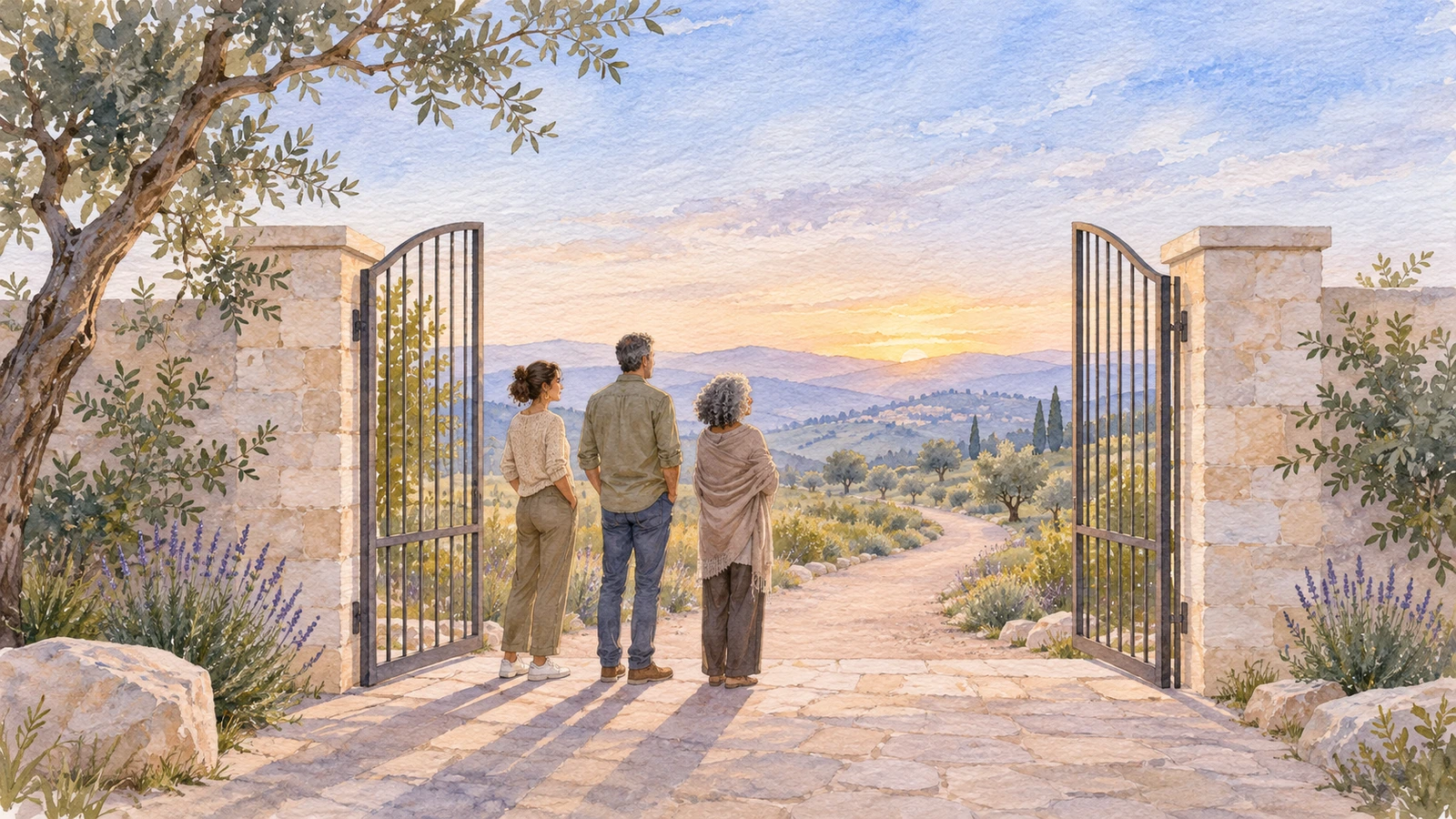
תרעא
Portion Toldot · Month of Kislev
The Gates of Blessing
Rabbi Isaac Luria's meditation,
for opening the gate of Mazal
Rabbi Isaac Luria's meditation,
for opening the gate of Mazal
Kislev has begun, the month of miracles, and this week's portion, Toldot, brings a meditation the Ari left for anyone who needs to open a gate: children, livelihood, healing, joy, any blessing that seems closed. Michael Berg shared this teaching, and it springs from a single verb in Genesis 25:21.
The video is 13 minutes long
almost four of explanation and nine of meditationwith Portuguese and English subtitles
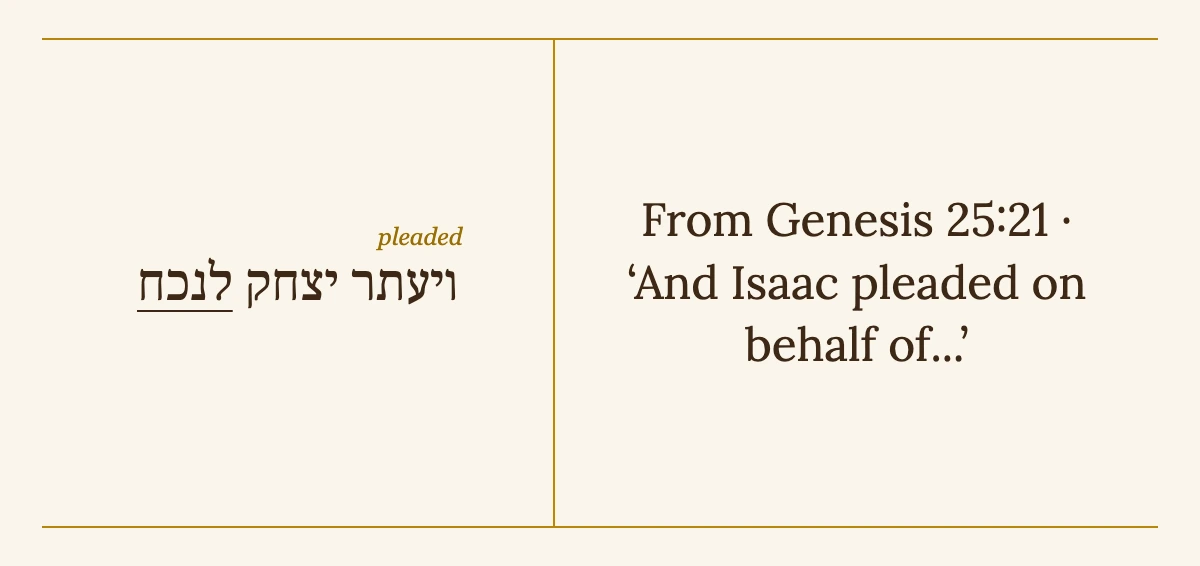
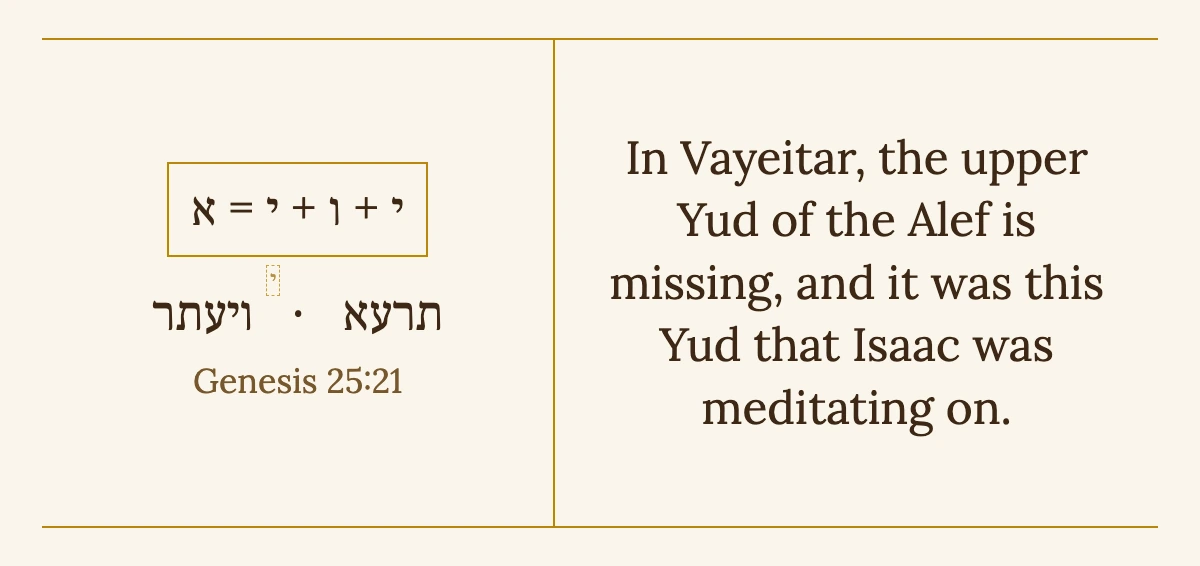
In the verse where Isaac pleads for his wife, the word Vayeitar carries only the Vav and the lower Yud of the letter Alef. The upper Yud is missing. When it is brought back, the Alef is completed and the word becomes Tar'a, the gate.
Kislev is the month of miracles, and Toldot is the portion in which Isaac opens a gate for his wife. The guide in the video joins the two: this week, and throughout the whole month, we want to open the gate of miracles.
The meditation is short and can be repeated every day, or any time you feel you need to open a gate in your life.
Source: video "Rav Isaac Luria Opening the Gates of Blessing".
In Genesis 25:21, Isaac pleads for his wife, Rivka, so that she can bear children, and the Creator gives him what he asked, regardless of Rivka's karma and destiny.
Mazal is often translated as "luck," but the Kabbalah University handout reminds us that Kabbalah teaches that luck has nothing to do with how many blessings someone has in life. Most of the time, blessings arrive through merit, through positive actions in this life and in past lives.
The Ari adds something that changes everything: regardless of someone's merits, it is possible to access the chamber of Mazal by meditating on this combination. That is why it is especially recommended when there is difficulty in bringing children into the world, and also difficulty in drawing sustenance.
Sources: Genesis 25:21; the handout "Rav Isaac Luria's Meditation for Opening the Gates of Blessing," Kabbalah University (2014), which cites Shaar HaPesukim (The Gate of Verses), p. 64, on the portion of Toldot.
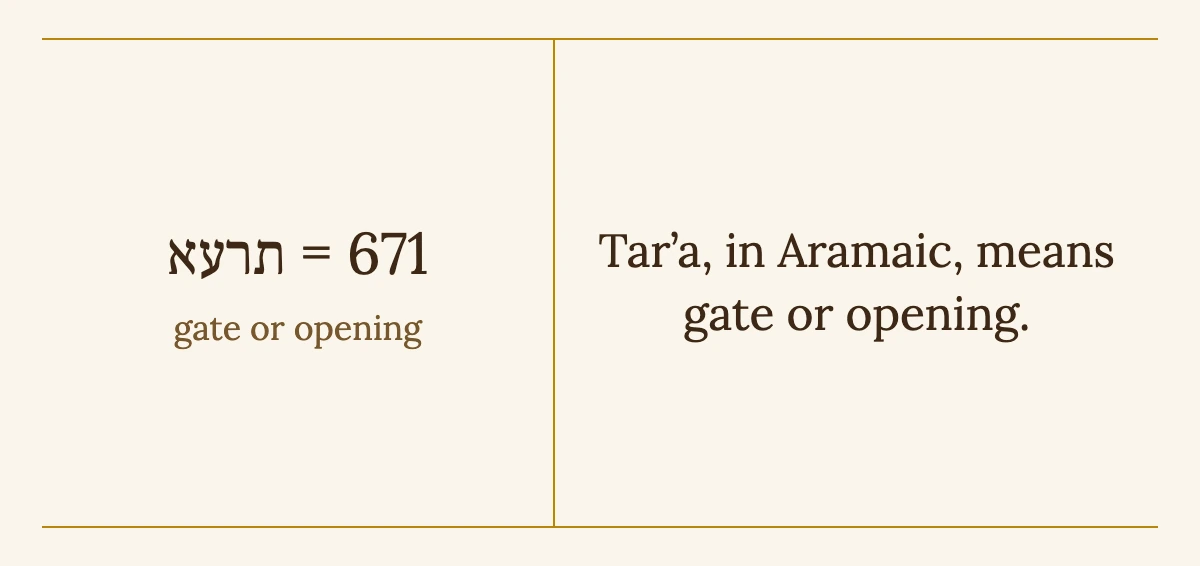
The Ari explains that Vayeitar is a name representing the upper gates, the ones that lead to the source of all blessings and all abundance. At the same time, it connects us to a word in Aramaic: Tar'a, which means gate, opening.
In the meditation, Vayeitar is the lock on the gate. It has the Vav and the lower Yud, and the upper Yud is missing. That is why the gate is closed, and that is what Isaac resolved.
Source: the video and the Kabbalah University handout.
The upper Yud represents the connection to Keter, the seed level of all blessings. Isaac drew it down, completed the Alef and opened the gate.
That is what we try to do: use the power of consciousness, of conscious desire, to form and draw down the letter Yud, the upper one, from the upper worlds, from the thought of creation, which is only good, only positive, only full of love and caring.
Source: video.
Before using the tool, the meditation asks for a check: the blessing we ask for is for sharing, for revealing light, and not only for selfish reasons.
When the gate opens, joy and happiness come, success and healing, and then the wish to be a channel: for the people we love, for families and friends, for communities, for the country and for the whole world.
And, in the end, gratitude. All of it is thanks to the gift Isaac gave us this week, and to all the wisdom that comes to us from the teachers, through the lineage of kabbalists, through all the generations.
Source: video.
Tap to open the image and zoom in.
Tap to open the image and zoom in.
Tap to open the image and zoom in.
Tap to open the image and zoom in.
Tap to open the image and zoom in.
Tap to open the image and zoom in.
Tap to open the image and zoom in.
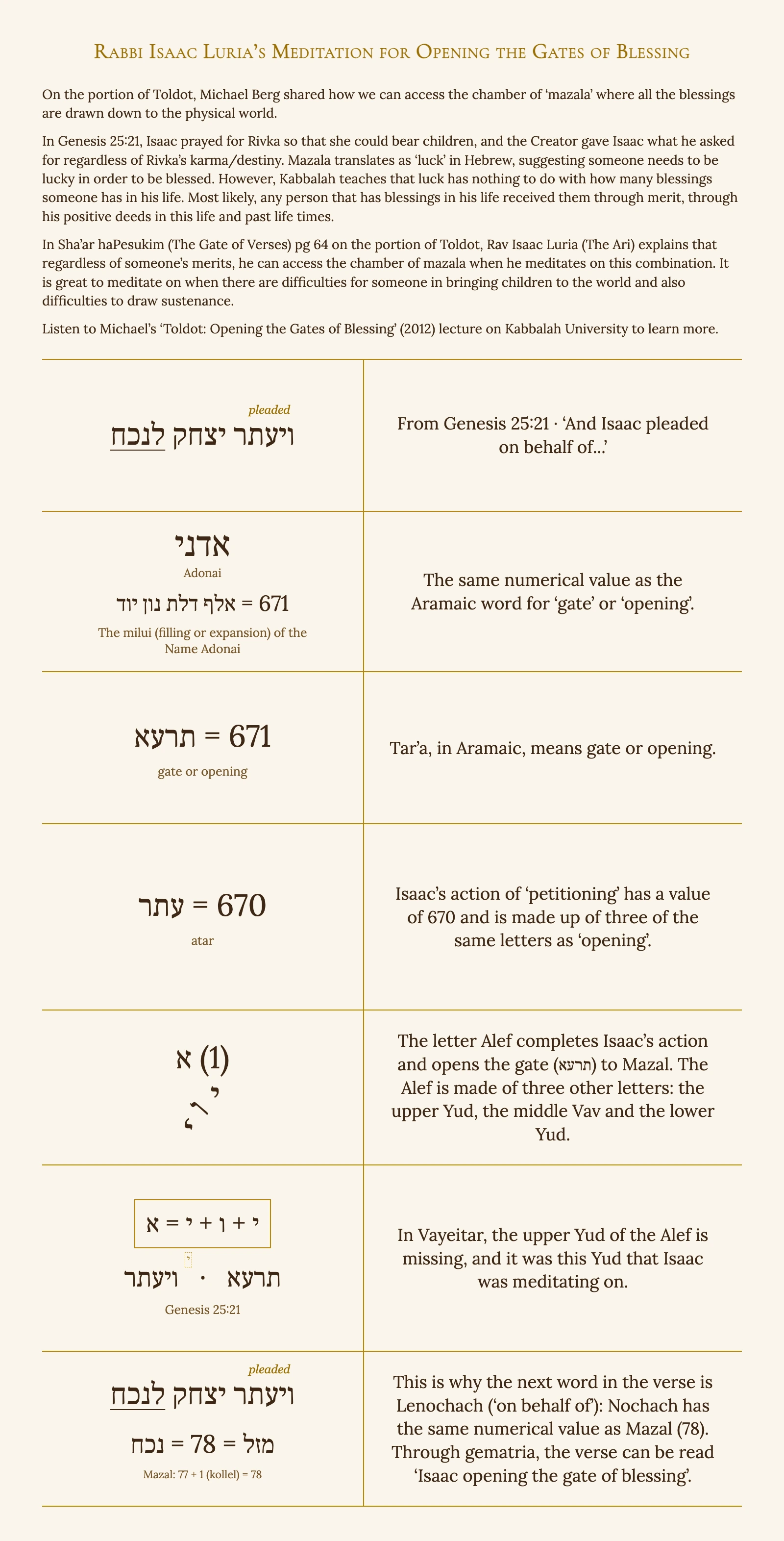
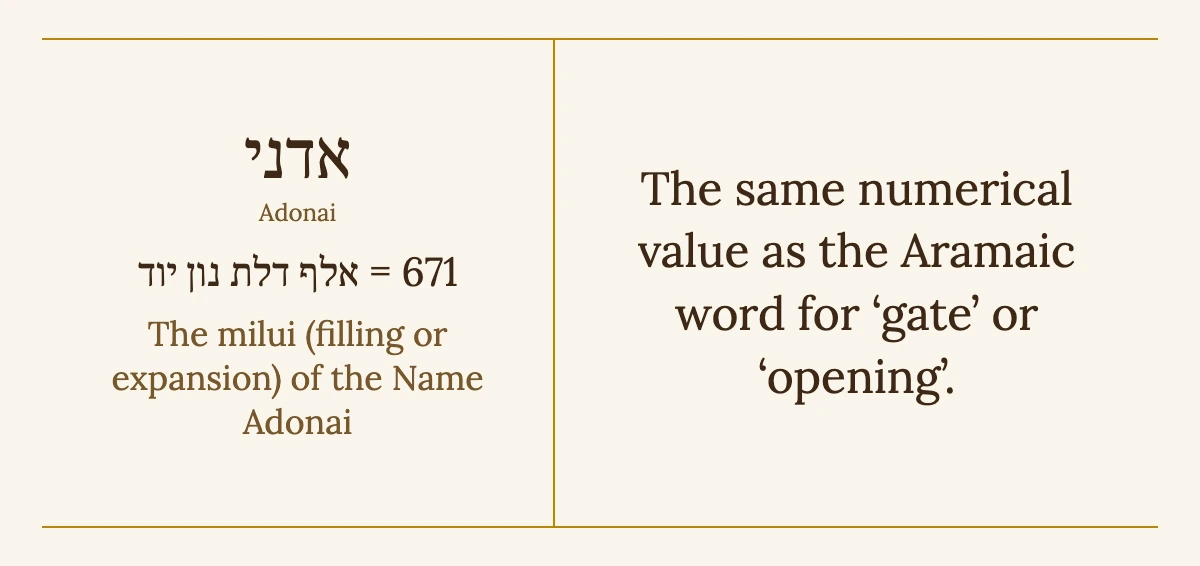
In Aramaic, gate or opening. Its numerical value is 671, the same as the filling (milui) of one of the Names of the Creator.
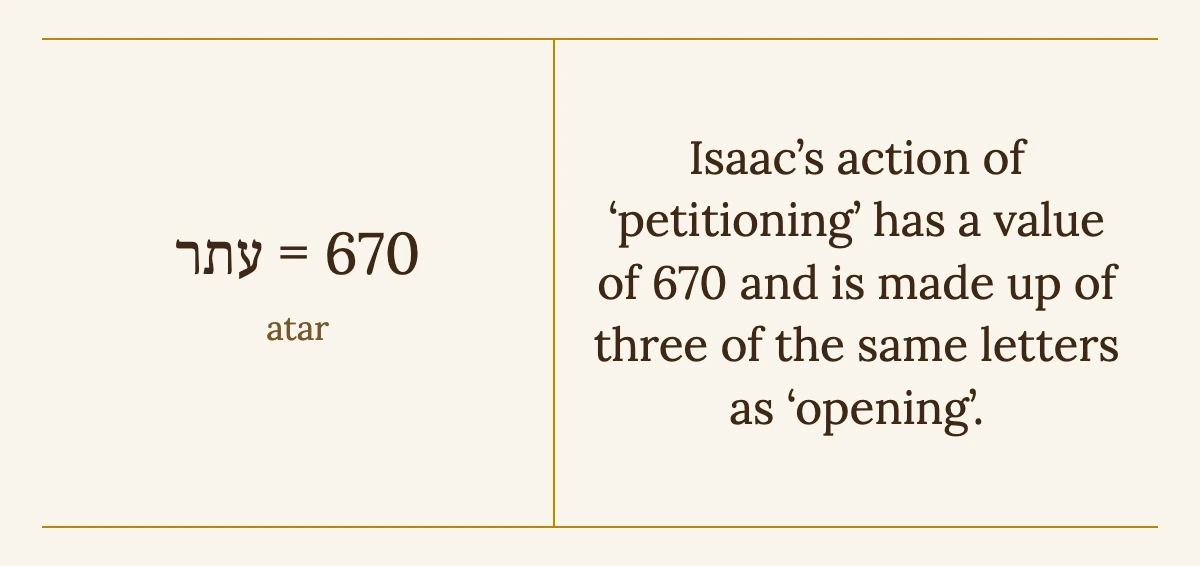
Isaac's action, pleading, is worth 670 and is made of three of the same letters as Tar'a.
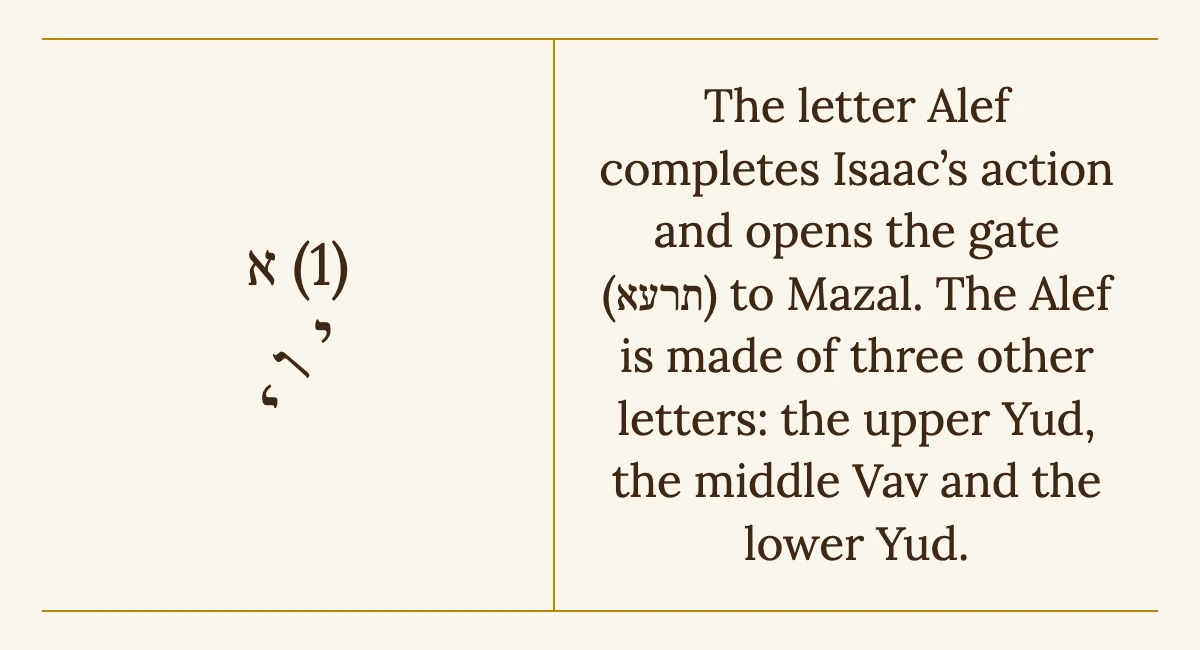
The letter Alef completes Isaac's action and opens the gate to Mazal. It is made of three letters: the upper Yud, the middle Vav and the lower Yud.
In Vayeitar the upper Yud of the Alef is missing, and it was on it that Isaac meditated. With the Alef complete, the word reads Tar'a.
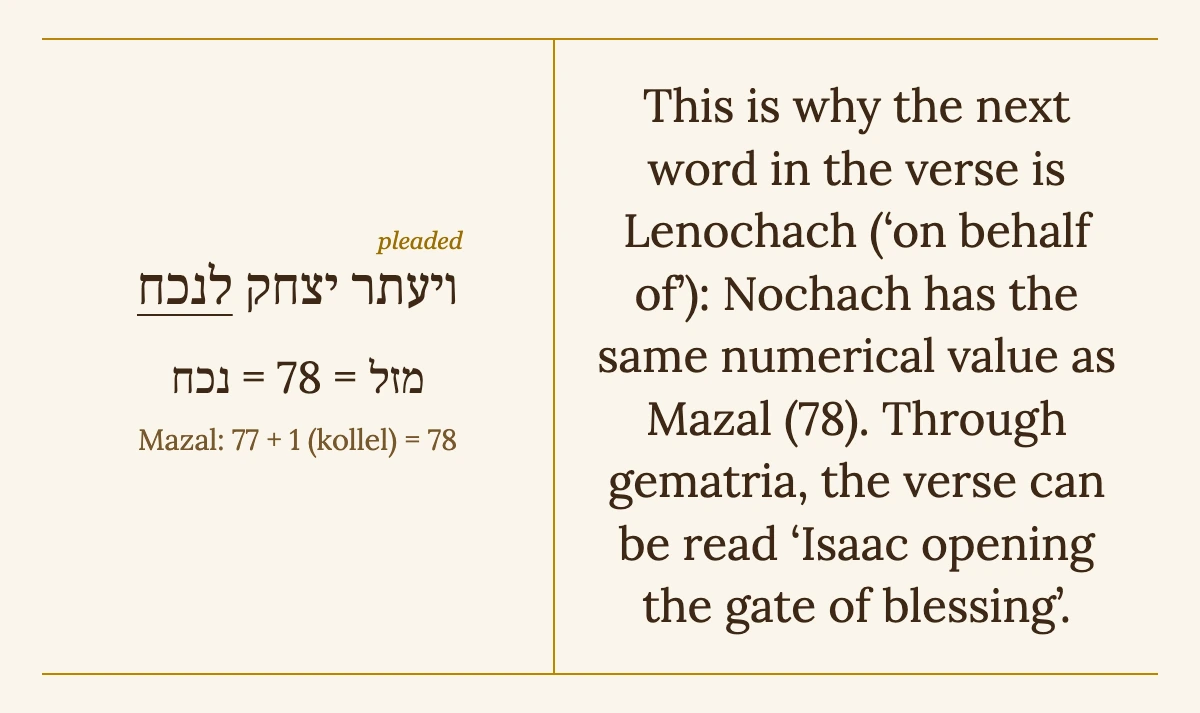
That is why the next word of the verse is Lenochach ("on behalf of"): Nochach is worth 78, the same value as Mazal and as three times the four-letter Name (26 × 3). Through gematria, the verse can be read: "Isaac opening the gate of blessing."
Gematria is kabbalistic numerology: every Hebrew letter has a value, and words of the same value shed light on each other.
Which blessing do I want to open, and with whom will I share it?
Sources: the video "Rav Isaac Luria Opening the Gates of Blessing" (a guided meditation, with Portuguese and English subtitles made for this page), based on Michael Berg's teaching from the writings of the Ari; and the handout "Rav Isaac Luria's Meditation for Opening the Gates of Blessing," from Kabbalah University (2014), which points to Michael Berg's lecture "Toldot: Opening the Gates of Blessing" (2012).
Classical textual sources: Genesis 25:21; Shaar HaPesukim (The Gate of Verses), p. 64, on the portion of Toldot. Note from this study: the sum of Mazal (77) reaches 78 by counting the word itself as one (kollel), a common gematria convention. This arithmetic remark is ours, not from the video or the handout.
Every week I send the highlights, the practice and the links. No noise, one message a week.
Get it on WhatsApp →