
The eight weeks of return, healing, and consciousness, a cosmic opening to gather the lost sparks of Light.
As the reading of the book of Shemot begins, it signals the start of a special cosmic opening that lasts eight weeks, within the two months of Pisces.
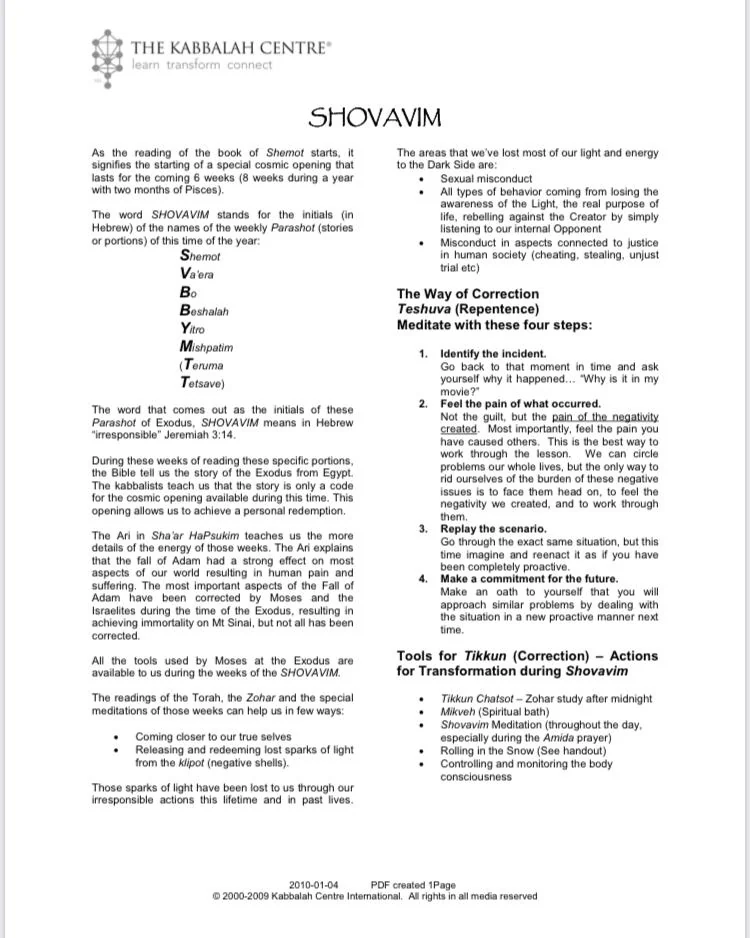
The word SHOVAVIM is formed from the initial Hebrew letters of the names of the weekly Torah portions of this period:
The word that emerges from these initials, SHOVAVIM, means in Hebrew "wayward ones" (Jeremiah 3:14). During these weeks, the Torah tells us the story of the Exodus from Egypt. The kabbalists teach that this story is only an outer layer of the cosmic opening available in this period, an opening that allows us to reach a personal redemption.
The Ari (Rav Isaac Luria) teaches that the more detail there is in these weeks, the deeper the energy. The Fall of Adam had a powerful impact on almost every aspect of our world, resulting in pain and suffering. The most important aspects of that Fall were corrected by Moses and the people of Israel during the Exodus, culminating in immortality at Mount Sinai, but not everything was corrected. All the tools Moses used in the Exodus are available to us during the weeks of SHOVAVIM.
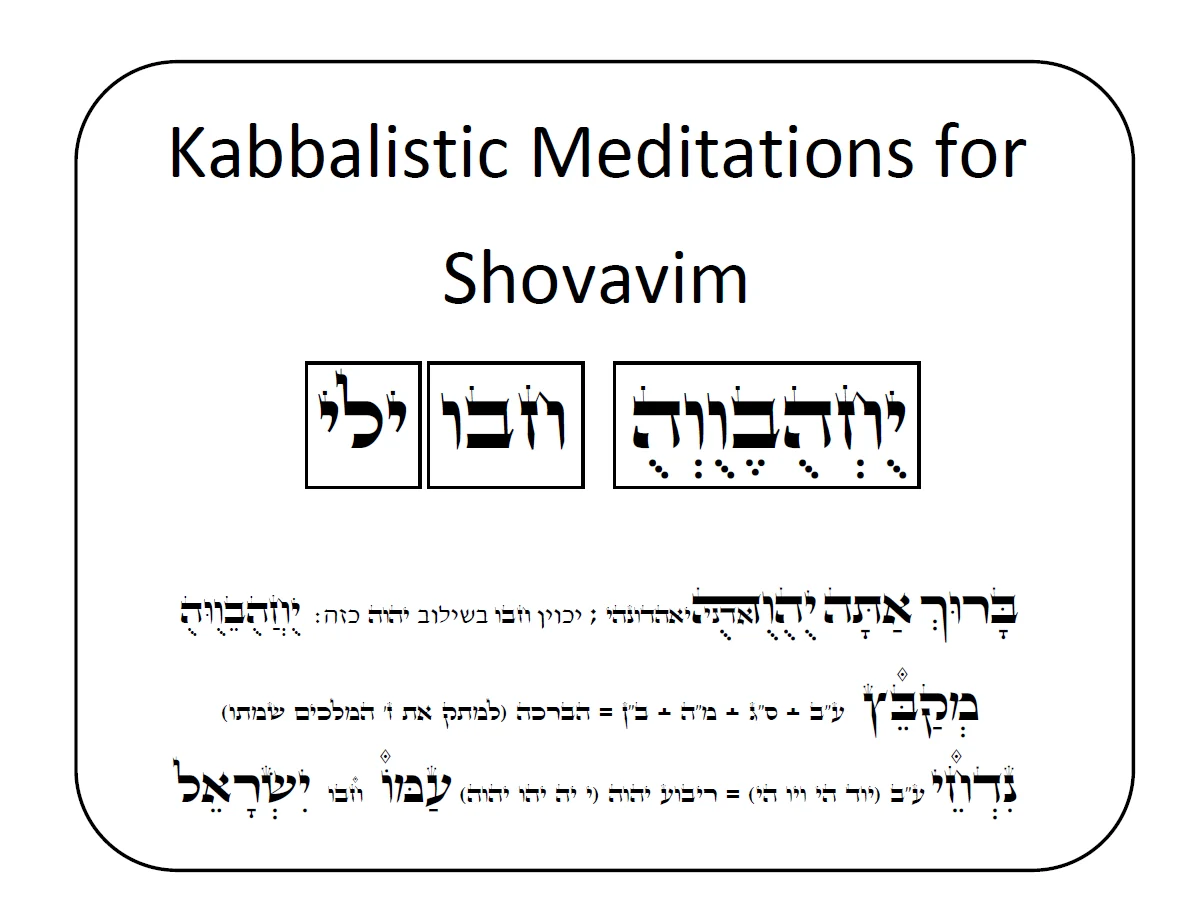
The Torah readings, the Zohar, and the special meditations of these weeks can help us draw closer to our true self and to release and redeem sparks of Light lost in the klipot (negative shells), sparks lost through our wayward actions, in this life and in past lives.
Meditate with these four steps:
SHOVAVIM is not a period of guilt, it is a period of recovering Light. The word "wayward ones" does not point to judgment, but to unconsciousness: moments when we forgot who we are.
According to Rav Ashlag, the greatest spiritual failure is not making a mistake, it is acting without consciousness. SHOVAVIM reopens access to the same spiritual forces that freed the people from Egypt, now applied to our inner Egypt. Michael Berg teaches that true Teshuvah is not emotional regret, but a conscious rewriting of the soul's narrative. Karen Berg reinforces that every correction made in this period does not correct only the present, but unties knots from past and future lives.
This is a time when the Creator does not ask for perfection, but for presence.
1. Daily observation. During the day, observe: where do I act on autopilot? Where do I seek pleasure, control, or escape? Where do I forget the Light? Note one pattern per day, without judgment.
2. Conscious Teshuvah. Choose one situation per week and apply the four steps: Identify, Feel, Re-enact, Commit.
3. Practical Restriction. Choose one area for conscious Restriction, words, impulses, emotional reactions, or repetitive habits. The goal: to create space for the Light to enter.
4. Proactive act of Light. For each pattern identified, perform an opposite action: judgment becomes compassion, laziness becomes effort, fear becomes trust.
I take responsibility for my consciousness.
Where there was forgetting, I bring Light.
Where I lost sparks, I gather them back.
Comments
Share what this day stirred in you. We're here to listen.
Loading…