
Insights Kabalísticos
por Thiago Moshe
O episódio que muda toda a perspectivaThe episode that shifts the whole perspective
Esta página é um mapa, uma síntese do Episódio 38 da série Jesus sem Censura (Unredacting Jesus), de Billy Phillips. Tudo o que você lê aqui é a forma como Billy apresenta esses ensinamentos. O convite é sempre o mesmo: assista ao episódio e tire suas próprias conclusões.
This page is a map, a synthesis of Episode 38 of the series Unredacting Jesus, by Billy Phillips. Everything you read here is the way Billy presents these teachings. The invitation is always the same: watch the episode and draw your own conclusions.
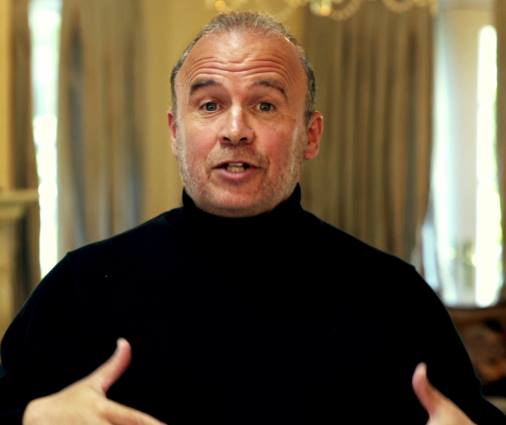
Billy Phillips deixou este mundo físico há pouco mais de um ano.
Billy Phillips left this physical world a little over a year ago.
137.orgNa apresentação de Billy, este é o coração do episódio. Quando o Criador colocava coroas decorativas (os tagim) sobre as letras da Torah, chamou-as de espinhos; Moshe as chamou de coroas. A mesma forma, dois nomes.
In Billy's presentation, this is the heart of the episode. When the Creator placed decorative crowns (the tagim) upon the letters of the Torah, He called them thorns; Moses called them crowns. The same form, two names.
Jesus retoma exatamente essa imagem: "nem um yud, nem o espinho de um yud". O Yud (י) é a primeira letra do Nome do Criador e corresponde a Keter, a Coroa, a dimensão mais elevada. Numa só letra, o espinho e a coroa. E daí a escolha: mudar pela dor (os espinhos) ou pela plenitude (a coroa).
Jesus takes up exactly this image: "not a yud, nor the thorn of a yud." The Yud (י) is the first letter of the Creator's Name and corresponds to Keter, the Crown, the highest dimension. In one single letter, the thorn and the crown. And from there, the choice: to change through pain (the thorns) or through fullness (the crown).
Billy abre o episódio com um sábio quase apagado da história: o grande Rabi e kabalista italiano Moshe David Valle (, 1777), cujos manuscritos nunca foram divulgados, permanecem trancados em Budapeste, em Israel e no Seminário Teológico Judaico de Nova York. Seus escritos, diz Billy, amedrontavam tanto as instituições religiosas que a única saída foi ignorá-lo: sua vida, sua identidade e seus trabalhos foram censurados da história por séculos.
Billy opens the episode with a sage almost erased from history: the great Italian Rabbi and kabbalist Moses David Valle (, 1777), whose manuscripts were never released, they remain locked away in Budapest, in Israel, and at the Jewish Theological Seminary in New York. His writings, Billy says, frightened the religious institutions so deeply that the only way out was to ignore him: his life, his identity, and his works were censored out of history for centuries.
Foi outro mestre, Moses Haim Luzzatto (o Ramchal), quem revelou o segredo: Valle era o Messias de sua geração, o Messias, filho de David. E é dessa autoridade que virá a afirmação mais provocativa sobre Jesus.
It was another master, Moses Chaim Luzzatto (the Ramchal), who revealed the secret: Valle was the Messiah of his generation, the Messiah, son of David. And it is from that authority that the most provocative statement about Jesus will come.
Segundo a secreta tradição oral de Moshe que Billy cita, há dois Messias em cada geração: o Messias, filho de José (Mashiach ben Yosef), e o Messias, filho de David (Mashiach ben David). Se o nosso mundo não merece o seu aparecimento, eles morrem, em cada geração.
According to the secret oral tradition of Moses that Billy cites, there are two Messiahs in every generation: the Messiah, son of Joseph (Mashiach ben Yosef), and the Messiah, son of David (Mashiach ben David). If our world does not merit their appearance, they die, in every generation.
O filho de José vem fazer a guerra; o filho de David vem trazer a paz depois que a guerra é ganha. E aqui está a "bomba" que Billy atribui ao manuscrito de Valle: Jesus era o Messias, filho de José, vindo de uma autoridade judaica rabínica e kabalística altíssima.
The son of Joseph comes to make war; the son of David comes to bring peace once the war is won. And here is the "bombshell" that Billy attributes to Valle's manuscript: Jesus was the Messiah, son of Joseph, coming from an authority of the highest rabbinic and kabbalistic standing.
A guerra do filho de José não é física, não é sangue derramado nos campos de batalha. É, diz Billy, muito mais dolorosa: uma guerra contra a consciência humana, contra o ego. Contra o Adversário, a força que chamamos de Satan, que infecta a mente e o comportamento, e contra a corrupção que infesta as instituições religiosas e impede as pessoas comuns de se conectarem à Luz, ao Esplendor, à realidade dos 99%.
The war of the son of Joseph is not physical, it is not blood spilled on battlefields. It is, Billy says, far more painful: a war against human consciousness, against the ego. Against the Opponent, the force we call Satan, which infects the mind and behavior, and against the corruption that infests the religious institutions and keeps ordinary people from connecting to the Light, to the Splendor, to the reality of the 99%.
É por isso, na leitura de Billy, que Jesus veio acabar com a corrupção, para que a Luz perdida no Monte Sinai pudesse ser restaurada em nosso mundo. Até "a espada" é metáfora: o próprio Tetragrama é também chamado de "a espada de Deus".
That is why, in Billy's reading, Jesus came to put an end to corruption, so that the Light lost at Mount Sinai could be restored to our world. Even "the sword" is a metaphor: the Tetragrammaton itself is also called "the sword of God."
Billy passa então ao manuscrito que seu professor, o kabalista Rav Berg, lhe deu na Véspera de Ano Novo do ano 2000. Nele, dois meninos brilhantes, profundamente incomodados com a corrupção e a discórdia entre os judeus, aprendem juntos e voltam a se encontrar 25 anos depois, já adultos: um era Josué, filho de José, Jesus; o outro, Shimon bar Yohai. Ambos aprenderam a Tradição Oral Secreta do grande sábio Rabi Akiva.
Billy then moves to the manuscript that his teacher, the kabbalist Rav Berg, gave him on New Year's Eve of the year 2000. In it, two brilliant boys, deeply troubled by the corruption and discord among the people, learn together and meet again 25 years later as grown men: one was Joshua, son of Joseph, Jesus; the other, Shimon bar Yohai. Both learned the Secret Oral Tradition of the great sage Rabbi Akiva.
Os dois testemunharam a morte dos 24.000 estudantes de Akiva. A causa profunda, segundo os maiores sábios e o manuscrito de Rav Berg, não foi apenas a praga, foi o ódio sem motivo: a incapacidade de tratar o outro com dignidade.
The two witnessed the death of Akiva's 24,000 students. The deep cause, according to the greatest sages and Rav Berg's manuscript, was not merely the plague, it was baseless hatred: the inability to treat another with dignity.
Quando os romanos proibiram a divulgação pública da sabedoria bíblica e silenciaram os rabinos, Jesus, ensina Billy, ocultou os segredos dentro de parábolas. Era um modo de levar a força desses ensinamentos ao povo apesar da censura.
When the Romans forbade the public teaching of biblical wisdom and silenced the rabbis, Jesus, Billy teaches, hid the secrets inside parables. It was a way to carry the force of these teachings to the people despite the censorship.
Havia ainda outra técnica: acrônimos e backronyms. As primeiras (ou as últimas) letras de palavras consecutivas formam um nome sagrado; só de saber que ele existe, diz Billy, você desencadeia sua influência e faíscas de Luz retornam ao mundo. Ele mostra exemplos escondidos nos Salmos, do nome Mashiach ao nome hebraico de Jesus e ao de Rabi Akiva.
There was also another technique: acronyms and backronyms. The first (or the last) letters of consecutive words form a sacred name; simply knowing that it exists, Billy says, unleashes its influence and sparks of Light return to the world. He shows examples hidden in the Psalms, from the name Mashiach to the Hebrew name of Jesus and that of Rabbi Akiva.
Há uma história de 2.000 anos: Moshe sobe ao Sinai (código, diz Billy, para os 99%) e vê o Criador atrasando a revelação da Torah para anexar pequenas coroas decorativas, os tagim, no topo das letras hebraicas. O Criador mostra a Moshe um sábio do futuro, Rabi Akiva, destinado a revelar inúmeros segredos sobre cada espinho dessas letras, os mesmos ensinamentos secretos a que Jesus teve acesso.
There is a 2,000-year-old story: Moses ascends Sinai (code, Billy says, for the 99%) and sees the Creator delaying the revelation of the Torah in order to attach small decorative crowns, the tagim, atop the Hebrew letters. The Creator shows Moses a sage of the future, Rabbi Akiva, destined to reveal countless secrets about each thorn of those letters, the very secret teachings to which Jesus had access.
Depois, Moshe vê o preço: a carne de Akiva pesada numa balança, como pedaços de carne num açougue, seu martírio. Os sábios de Israel diziam que o sofrimento de Akiva era um substituto para Deus; ele era "o substituto de Deus". Soa familiar? É uma das raízes ocultas do conceito de uma Coroa de Espinhos.
Afterward, Moses sees the price: Akiva's flesh weighed on a scale, like cuts of meat in a butcher's shop, his martyrdom. The sages of Israel said that Akiva's suffering was a substitute for God; he was "God's substitute." Sound familiar? It is one of the hidden roots of the concept of a Crown of Thorns.
Em Mateus 5:18, Jesus fala de "nem um jota, nem um til" da lei. Mas Jesus falava hebraico e aramaico, e o que ele disse, diz Billy, é uma expressão hebraica bem conhecida: "lo yod v'lo kots shel yod" – "nem um yud ou um espinho de um yud". A mesma palavra espinho que o Criador usou para as coroas.
In Matthew 5:18, Jesus speaks of "not one jot, nor one tittle" of the law. But Jesus spoke Hebrew and Aramaic, and what he said, Billy says, is a well-known Hebrew expression: "lo yod v'lo kots shel yod" — "not a yud or a thorn of a yud." The same word thorn that the Creator used for the crowns.
E aqui o segredo se fecha: o Yud (י), primeira letra do Nome, corresponde a Keter, que em hebraico significa coroa, o reino mais alto das Dez Dimensões. Numa só letra, o espinho e a coroa; ocultando e revelando ao mesmo tempo.
And here the secret closes: the Yud (י), the first letter of the Name, corresponds to Keter, which in Hebrew means crown, the highest realm of the Ten Dimensions. In one single letter, the thorn and the crown; concealing and revealing at the same time.
Qual é a conclusão prática? Billy é enfático: não estamos aqui para sofrer. Os Sábios kabalísticos ensinam dois caminhos para a Redenção, o das coroas, que é a misericórdia, e o dos espinhos, que é o julgamento. Se tomamos a Bíblia literalmente, mudamos pelos espinhos, pelo sofrimento e pela dor; se investigamos os segredos internos, mudamos pelo poder da Coroa, como um rei em pleno domínio de seu reino. A escolha, sempre, coube a nós.
What is the practical conclusion? Billy is emphatic: we are not here to suffer. The kabbalistic Sages teach two paths to Redemption, that of the crowns, which is mercy, and that of the thorns, which is judgment. If we take the Bible literally, we change through the thorns, through suffering and pain; if we investigate the inner secrets, we change through the power of the Crown, like a king in full command of his kingdom. The choice, always, has been ours.
É esse o fio que atravessa toda a série: os ensinamentos ocultos de Jesus, na apresentação de Billy, são a Kabbalah, transformação interior, não religião externa. E quem, segundo ele, pediu a Jesus que fosse adiante mesmo diante da ameaça à sua vida, foi sua esposa, Miriam.
This is the thread that runs through the whole series: the hidden teachings of Jesus, in Billy's presentation, are Kabbalah, inner transformation, not outer religion. And the one who, according to him, asked Jesus to go forward even in the face of the threat to his life was his wife, Miriam.
Se a escolha entre o Espinho e a Coroa é minha, o que, em mim, ainda escolhe mudar pela dor em vez da plenitude?
If the choice between the Thorn and the Crown is mine, what, within me, still chooses to change through pain instead of through fullness?
Fonte: Jesus sem Censura (Unredacting Jesus), Episódio 38, "Jesus, Akiva e a Coroa", de Billy Phillips. Esta página é uma síntese em português, na voz de Thiago Moshe · Insights Kabalísticos.
Source: Unredacting Jesus, Episode 38, "Jesus, Akiva, and the Crown," by Billy Phillips. This page is a synthesis, in the voice of Thiago Moshe · Insights Kabalísticos.
Todas as afirmações, inclusive "os ensinamentos secretos de Jesus são Kabbalah", Jesus como Messias, filho de José (Mashiach ben Yosef), e o manuscrito de Moshe David Valle, são apresentadas como a exposição de Billy Phillips e das fontes que ele cita (o manuscrito de Rav Berg, os Salmos, Mateus), não como fato histórico estabelecido.
All the statements, including "the secret teachings of Jesus are Kabbalah," Jesus as Messiah, son of Joseph (Mashiach ben Yosef), and the manuscript of Moses David Valle, are presented as Billy Phillips's exposition and that of the sources he cites (Rav Berg's manuscript, the Psalms, Matthew), not as established historical fact.
ComentáriosComments
Compartilhe o que este episódio despertou em você. Estamos aqui para ouvir.
Share what this episode awakened in you. We are here to listen.
Carregando…